


 English
 русский
 Español
 عربى

Product Category
NEW Category
Contact us
Contact Us
We specialise in the research, development and manufacture of electrical wires and cables.
 +86-18052558887
Traffic Signal Light Selection Guide: Key Parameters and Purchasing Essentials for LED Signal Lights
A traffic signal light looks simple, but a poor choice shows up quickly: washed-out colors in direct sun, moisture inside the lens, failed modules after two winters, or a failed inspection.
Why LED Traffic Signal Lights Are the Standard Choice Today
LED modules have replaced incandescent bulbs at most intersections because they use far less energy, last much longer and fail gradually instead of going dark without warning. A 12-inch (300 mm) red LED module typically draws about 8 to 11 W, while the incandescent lamp it replaces draws around 135 W.
Here is a simple example. A single intersection with 12 signal heads, one lamp lit per head at any time, runs 24 hours a day:
| Item | Incandescent (135 W) | LED (about 10 W average) |
|---|---|---|
| Power for 12 heads | 1,620 W | 120 W |
| Annual energy (8,760 h) | about 14,190 kWh | about 1,050 kWh |
| Annual cost at $0.12/kWh | about $1,700 | about $125 |
Takeaway: the saving is roughly 13,000 kWh and about $1,500 per intersection per year, so even a premium module pays back quickly. The real question is not LED versus incandescent, but which LED module will stay bright and sealed for ten years.
Types of Traffic Signal Lights and Where Each One Fits
Start by matching the signal type to the location. Buying the wrong size or optic is one of the most common and most expensive mistakes.
| Signal type | Common sizes | Best used for |
|---|---|---|
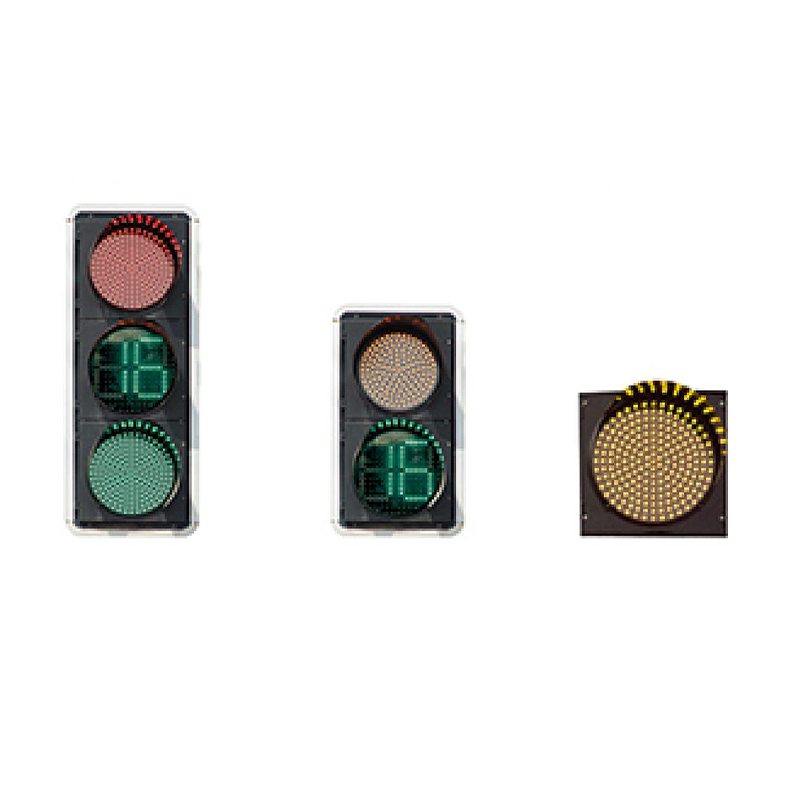
| Vehicle ball (full circle) | 200 mm (8 in), 300 mm (12 in) | Main intersection control; 300 mm for high-speed or wide roads |
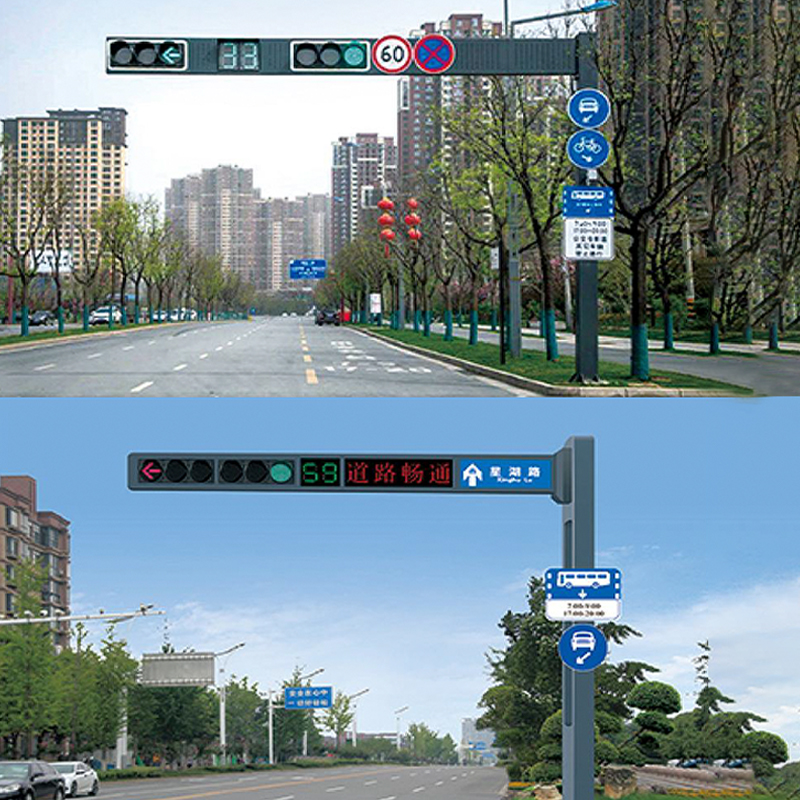
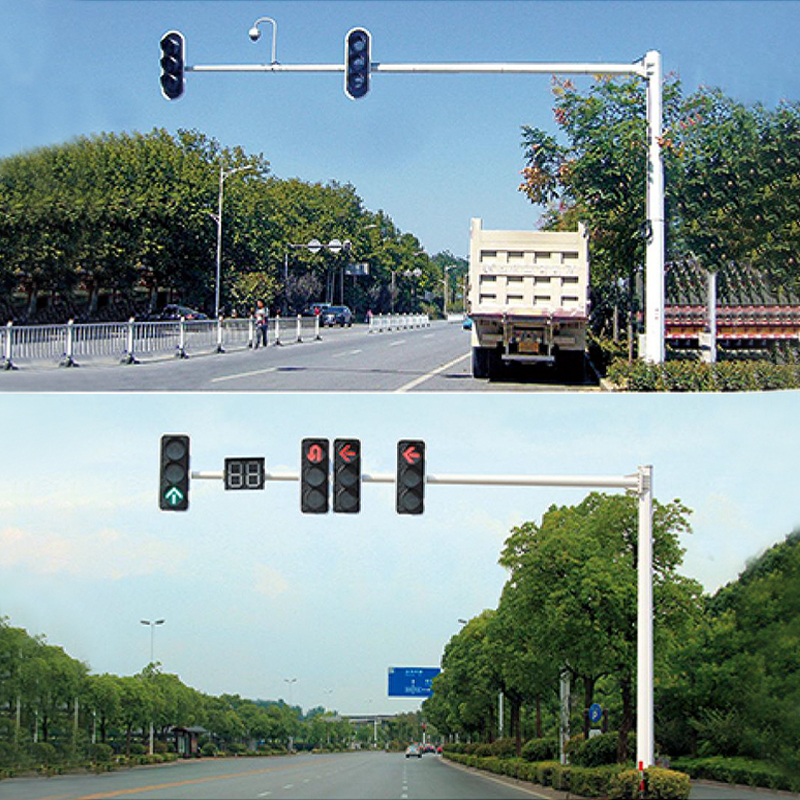
| Arrow signal | 200 mm, 300 mm | Protected left or right turns, lane-specific control |
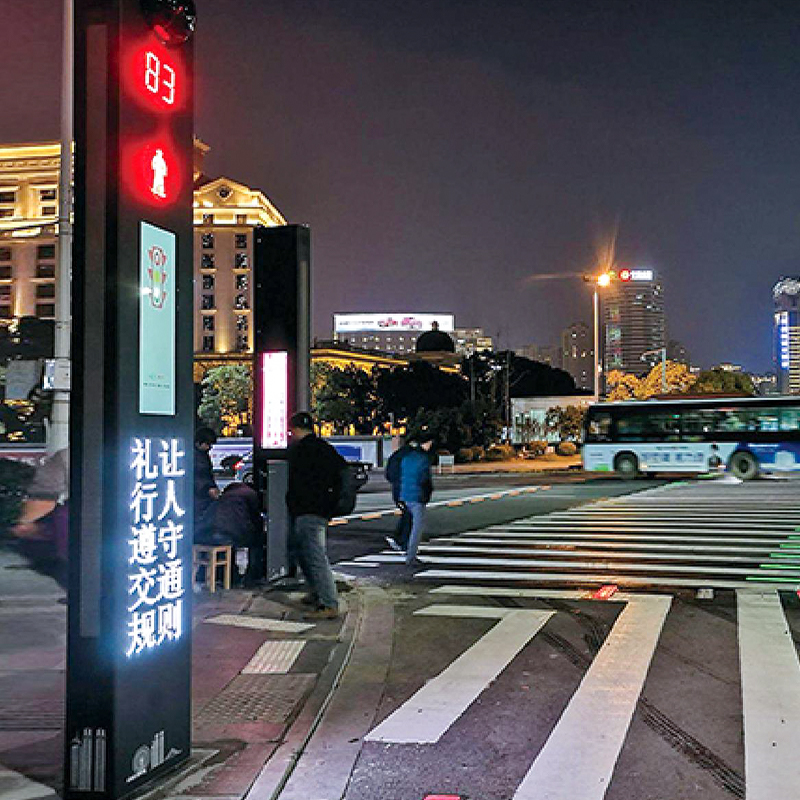
| Pedestrian signal | 200 mm, 300 mm | Crosswalks; walking person and standing hand symbols |
| Countdown timer | Integrated or standalone | Busy crossings where waiting time should be visible |
| Bicycle signal | 100 mm, 200 mm | Dedicated bike lanes and shared-path crossings |
| Solar or portable signal | 200 mm, 300 mm | Work zones, remote crossings, temporary control |
Choosing Between 200 mm and 300 mm Heads
The 300 mm head is generally preferred where approach speeds are high, the signal must be seen from a long distance, or the head is mounted far from the driver’s line of sight. The 200 mm head suits low-speed urban streets and secondary signals. Many agencies specify 300 mm for all primary heads, so check local rules before ordering.
Key Technical Parameters to Check Before You Buy
Datasheets can look similar while the real performance differs a lot. These are the parameters worth comparing line by line. The values below reflect common requirements for 300 mm modules, such as those in the ITE VTCSH specification, and are a useful benchmark when reviewing quotes.
| Parameter | Typical benchmark (300 mm) | Why it matters |
|---|---|---|
| Minimum luminous intensity | Red 133 cd, Yellow 800 cd, Green 267 cd | Ensures visibility in bright daylight |
| Dominant wavelength | Red about 625 nm, Yellow about 590 nm, Green about 500 nm | Keeps colors distinguishable, including for color-blind drivers |
| Viewing angle | 30° standard; 15° to 60° optional | Wider angles help on curves; narrow angles reduce confusion between adjacent lanes |
| Power consumption | Red 11 W max, Yellow 22 W max, Green 15 W max | Drives energy cost and battery or solar sizing |
| Power factor | 0.90 or higher | Reduces load on controllers and cabinet power supplies |
| Operating temperature | -40°C to +74°C | Prevents dimming or failure in extreme climates |
| Ingress protection | IP55 minimum; IP65 recommended | Blocks dust and rain-driven water |
| Input voltage | 85 to 265 VAC, or 12/24 VDC for solar | Tolerates unstable grids without flicker |
| Service life | 50,000 hours or more; at least 5 years of compliant output | Defines real maintenance interval and total cost |
Luminous Intensity and Light Distribution
Peak brightness alone is not enough. Ask for the full intensity distribution chart, because the light must stay above the minimum across the whole viewing cone, not just at the center. Also confirm the output at the end of life: reputable specifications require modules to keep meeting minimum intensity after years of operation at high temperature.
Phantom Effect and Sun Interference
Low sun can reflect off the lens and make an unlit signal appear lit. Good modules use a tinted lens, an optical design that limits reflection and a properly sized visor. Ask the supplier how the product performs at low sun angles, and request photos or test records rather than relying on a claim.
Electrical Protection
Power quality in the field is rarely perfect, so confirm built-in protection for:
- Surge and lightning transients, commonly tested to 2 kV or higher on the AC line
- Over-voltage and under-voltage conditions
- Low-current compatibility, so the controller’s conflict monitor reads the load correctly
- Electromagnetic compatibility, so the module does not disturb nearby equipment
Standards and Certifications to Request
A compliant product is easier to approve, easier to insure and easier to defend if an incident occurs. Ask for current third-party test reports, not only a certificate logo.
| Standard | Region | What it covers |
|---|---|---|
| ITE VTCSH (LED vehicle modules) | North America | Intensity, chromaticity, power, temperature and electrical performance |
| EN 12368 with CE marking | Europe | Optical classes, environmental and mechanical requirements |
| GB 14887 | China | Road traffic signal lamp performance and testing |
| IEC 60529 (IP rating) | International | Dust and water ingress protection |
| RoHS and ISO 9001 | International | Restricted substances and manufacturing quality management |
Tip: check that the report covers the exact model and size you are buying. A certificate for a 200 mm red module does not automatically cover a 300 mm green arrow.
Housing, Lens and Build Quality Details That Affect Lifespan
Two signals with identical brightness on day one can age very differently. Most field failures trace back to materials and sealing rather than the LED chips themselves.
Housing Material
- Polycarbonate (PC) with UV stabilizer: lightweight, impact resistant and widely used; confirm it is rated for UV and has fire-retardant properties
- Die-cast aluminum: excellent heat dissipation and strength, suited to harsh or coastal sites when properly coated
- Cheap recycled plastic: often yellows, warps or cracks within a few years and is best avoided
Lens, Gasket and Heat Management
The lens should be UV-resistant polycarbonate or tempered glass, with a continuous silicone or EPDM gasket that stays flexible at low temperatures. LED chips generate heat, and every 10°C rise in junction temperature can noticeably shorten life, so look for a metal-core PCB or a heat-spreading design instead of a bare plastic enclosure.
LED Chip and Driver Quality
Chip brand and binning
Ask which chip manufacturer is used and whether LEDs are binned for color and brightness. Poor binning causes visible color differences between heads at the same intersection.
Constant-current driver
A constant-current driver with quality capacitors keeps brightness stable as voltage changes. Low-grade electrolytic capacitors are a frequent weak point and often fail before the LEDs do.
Smart and Connected Features Worth Considering
Not every project needs advanced features, but if the signal network may be upgraded later, buying compatible hardware now avoids costly replacement.
- Controller compatibility: confirm the module works with your controller type and conflict monitor settings
- Dimming and sensor control: automatic night dimming can cut energy use and reduce glare in residential areas
- Remote monitoring: fault reporting for lamp failure or communication loss shortens response time
- Solar and battery readiness: low-power 12/24 VDC models are essential for off-grid and temporary signals
Purchasing Checklist for Evaluating Suppliers
Price comparison is the last step, not the first. Use the following sequence to narrow the field before negotiating.
Documents to Request
- Third-party test reports for photometry, IP rating and environmental testing
- Full datasheet with intensity distribution curves and power figures per color
- Warranty terms in writing, including what is covered and how replacements are handled
- Project references with contact details from similar climates and traffic conditions
Samples and Testing
Order two to three sample units before a bulk purchase. Inspect them for gasket fit, lens clarity and wiring quality, then run them for at least 72 hours under continuous power. If possible, view them outdoors in direct sunlight, since a signal that looks bright in an office can look faint at noon.
Warning Signs to Watch For
- A price far below other quotes with no clear explanation
- Certificates that do not list the specific model or have expired
- Refusal to provide test reports or reference projects
- Warranty shorter than three years, or full of exclusions
Installation and Maintenance Tips That Protect Your Investment
Even a high-quality module underperforms if it is installed poorly. These practices extend service life and keep the signal compliant.
- Align the heads carefully: a signal aimed even a few degrees off the approach lane can reduce visibility at distance
- Use proper cable glands and seal every entry point: most water damage starts at wiring openings, not at the lens
- Fit visors and backplates where needed: backplates improve contrast against bright backgrounds and are often required on high-speed roads
- Clean lenses periodically: dust and road film can reduce effective brightness, especially in dry or industrial areas
- Keep a small stock of spares: about 2 to 5 percent of installed units helps you restore a failed signal within hours
Frequently Asked Questions About Buying LED Traffic Signal Lights
How long should an LED traffic signal last?
Quality modules are rated for 50,000 hours or more, which is over five years of continuous operation, and many remain in service for eight to ten years with gradual dimming. Always confirm the warranty and the brightness retained at the end of the rated life.
Can LED modules replace existing incandescent lamps?
In most cases yes, using retrofit modules that fit the existing housing. Check controller and conflict monitor compatibility first, because very low LED current can occasionally be misread as a lamp-out condition.
What IP rating is enough?
IP55 is a practical minimum for most roads, while IP65 is safer for areas with heavy rain, pressure washing, dust or coastal salt air.
Is the cheapest module ever a good idea?
Rarely. Because the module cost is small compared with traffic control labor, crane or bucket truck time and the risk of signal failure, a more reliable unit usually has the lowest total cost over its life.
Final Thoughts on Selecting the Right Traffic Signal Light
A good selection process comes down to four steps: match the signal type and size to the site, verify the key parameters against recognized benchmarks, require current third-party certification, and test samples before committing to volume.
Follow that sequence and you will end up with traffic signal lights that stay bright, stay sealed and stay compliant, which is exactly what drivers and pedestrians depend on every day.
Interested in cooperation or have questions?
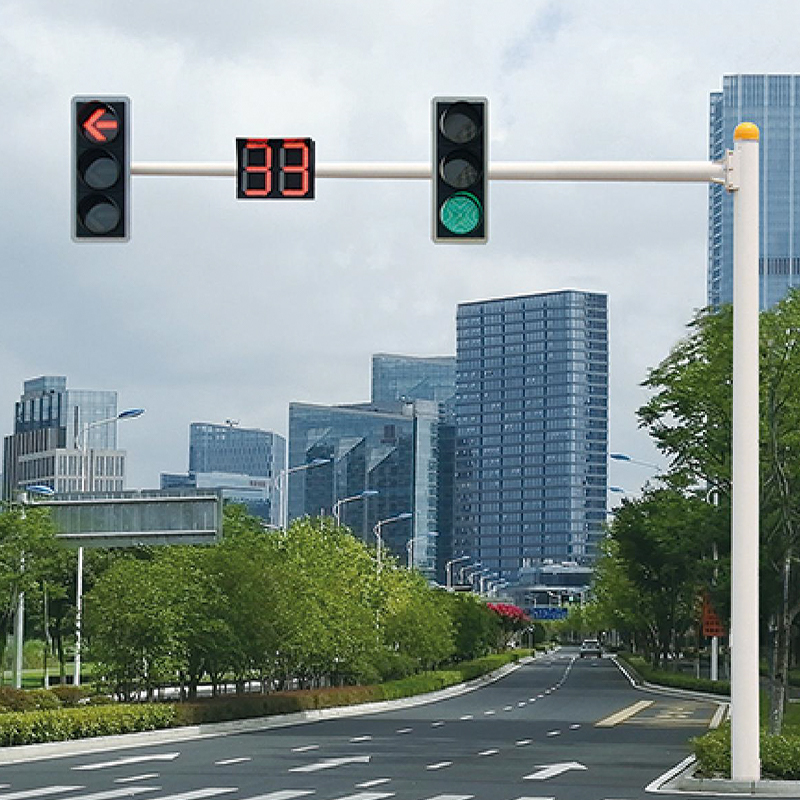
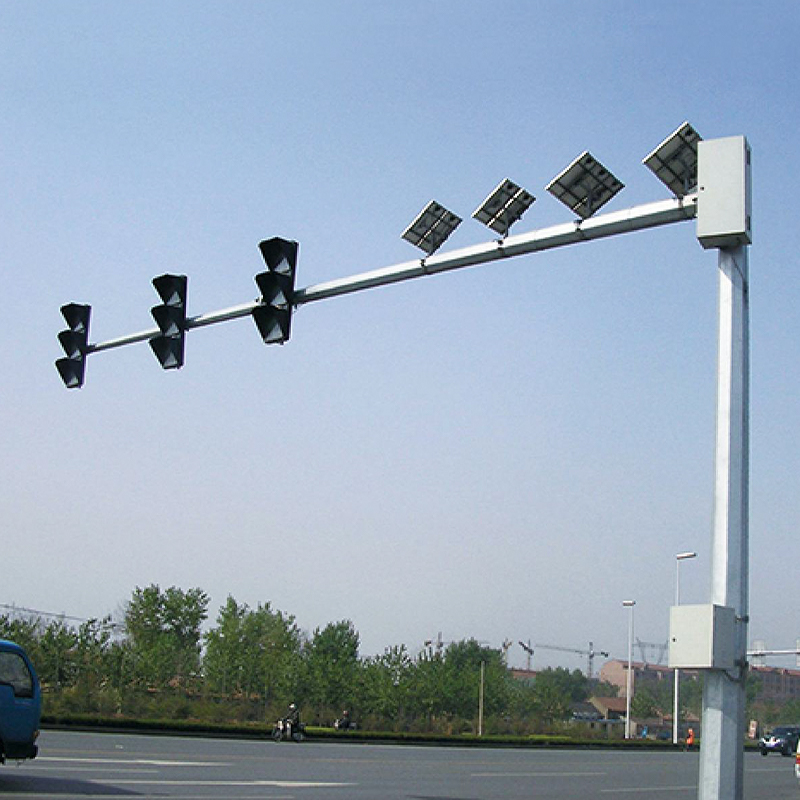
Looking for a Reliable Traffic Signal Light Manufacturer?
Yongyao provides customized traffic signal products for different road infrastructure projects.
We support adjustments in structure, dimensions, installation methods, and equipment compatibility to meet specific project requirements.

Yongyao is ready to support your project with responsive communication and practical, project-oriented product solutions.
Contact Us
-
 18052558887@163.com
-
913041567@qq.com
-
 +86-18052558887
-
 Zone 3, Guoji Industrial Park, Songqiao Town, northern suburbs of Yangzhou, Jiangsu Province, China
