


 English
 русский
 Español
 عربى

Product Series
Product Category
- Traffic Signal Light
- Crosswalk Signal Light
- Solar Signal Light
- Traffic Signal Light Source
- Road Monitoring Pole
- Road Signs
- Road Signs Pole
- LED Traffic Guidance Screen Pole
- Highway Electronic Screen Frame
- Intelligent Traffic Camera Column
- Multifunctional Combination Lamp Pole
- Solar Road Lamp
- Smart Streetlights
Contact us
 +86-18052558887


 About Us
A Manufacturer Focused on Road Infrastructure Products
As China Signal Traffic Light Manufacturers and Traffic Signal Light Suppliers, with experience in manufacturing products for road traffic management, traffic safety, and roadway lighting, we support customers with project-based sourcing and customized procurement requirements.
Yongyao is more than a product supplier. We aim to be a reliable manufacturing partner that understands the practical requirements of each project.
For contractors, distributors, and engineering procurement companies, this means more efficient and reliable coordination—from requirement confirmation and product customization to production and delivery.
 Supporting Standard Supply and Custom Production
Supporting Standard Supply and Custom Production
Supporting Standard Supply and Custom Production
News
Stay Updated on Our Latest News and Exhibitions
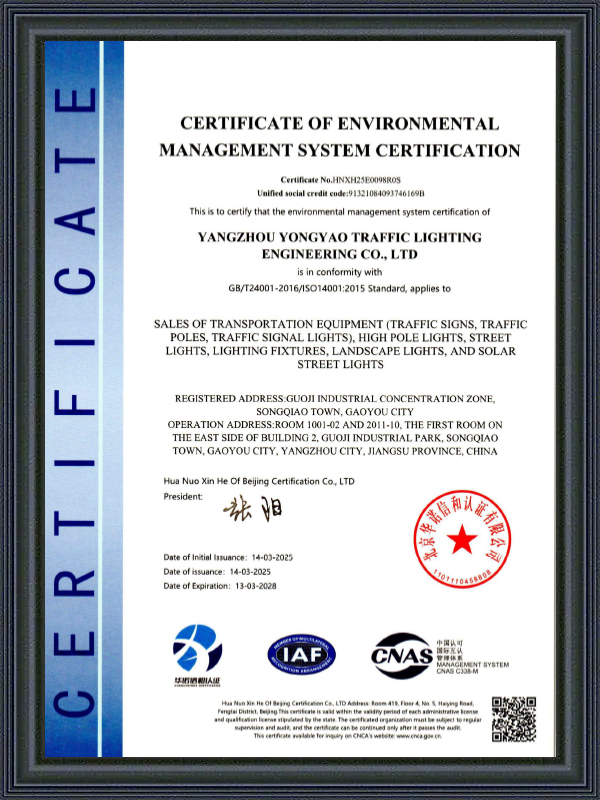
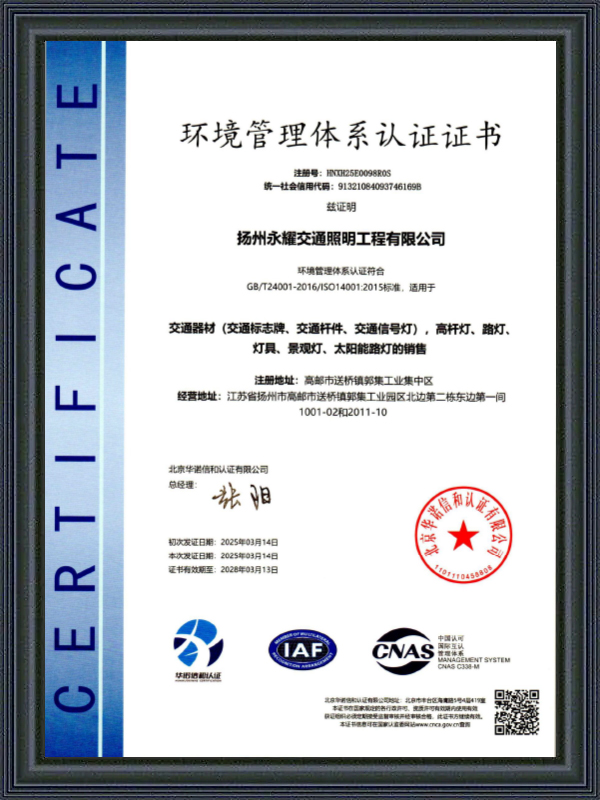
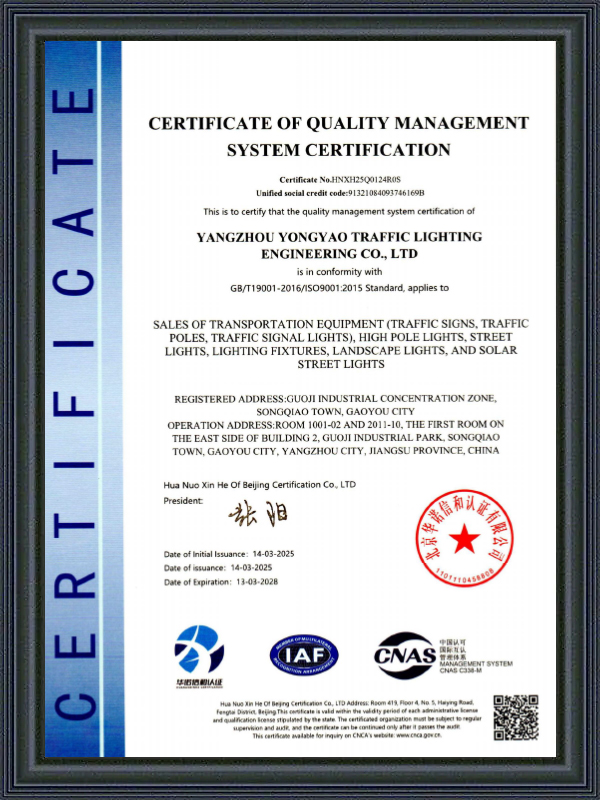
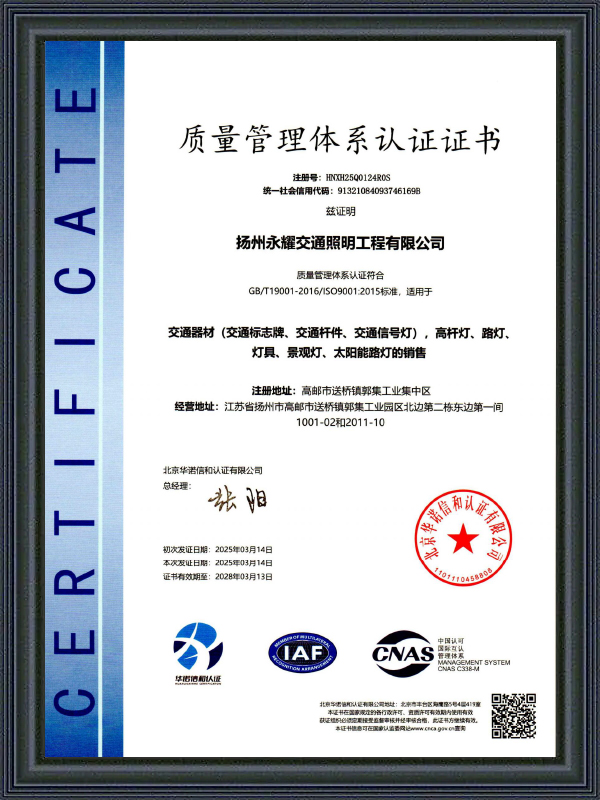
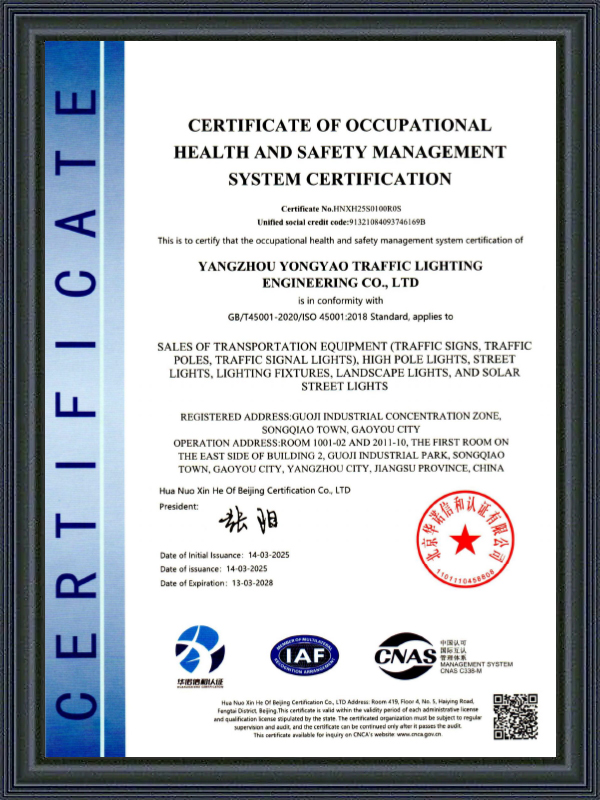
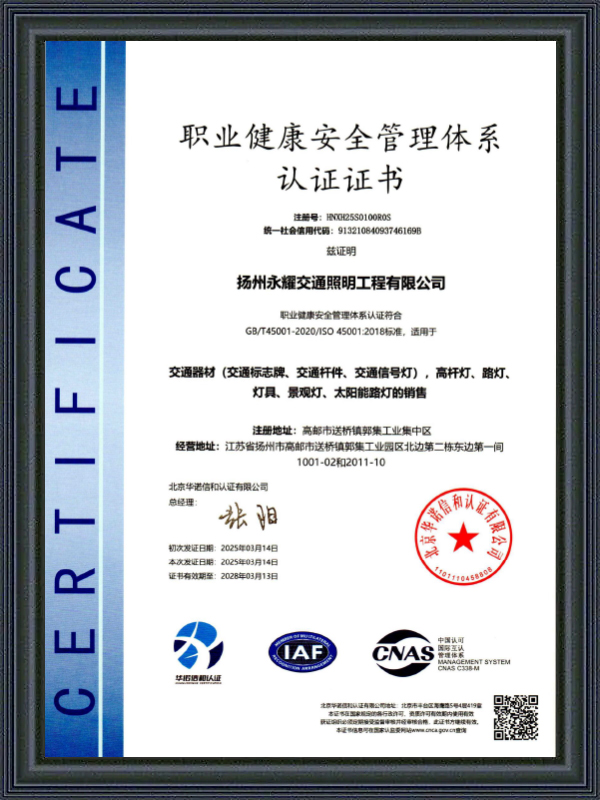
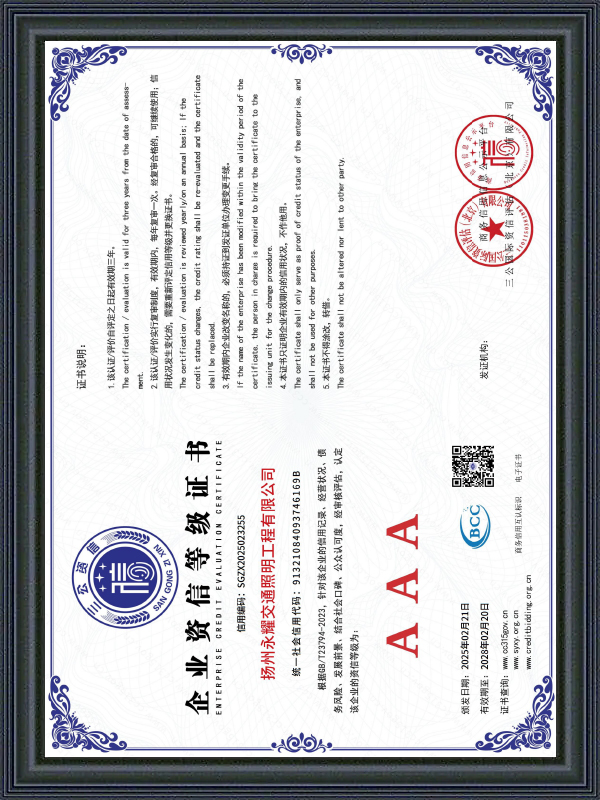
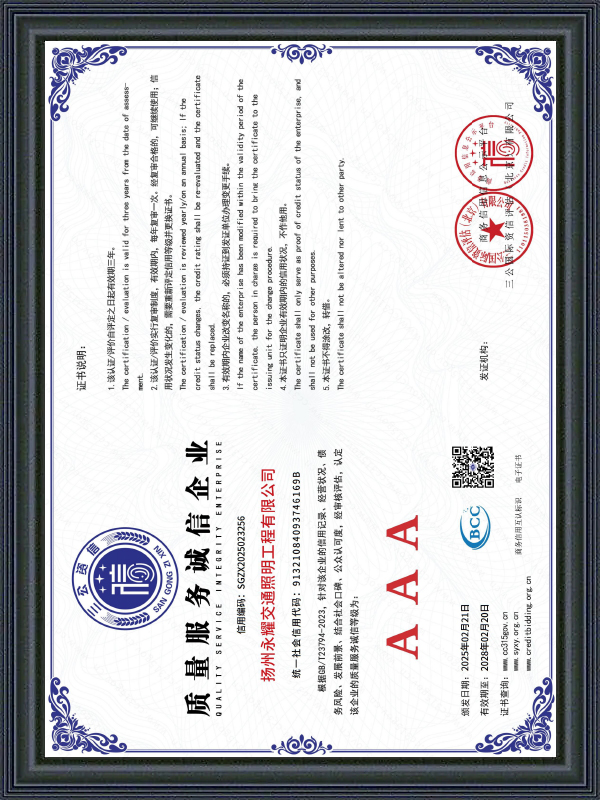
Yangzhou Yongyao Traffic Lighting Co., Ltd. is a manufacturer specializing in Traffic Signal Light systems, traffic control equipment, and supporting steel structures for road traffic management and transportation infrastructure projects. Our product portfolio covers a comprehensive range of vehicle traffic signal heads, pedestrian traffic signals, crosswalk signal systems, solar-powered traffic signals, LED light source modules, traffic signal poles, cantilever poles, overhead support frames, and related mounting components. By combining traffic signal equipment manufacturing with steel structure fabrication, Yangzhou Yongyao Traffic Lighting Co., Ltd. provides coordinated product solutions for contractors, engineering companies, traffic system integrators, distributors, and infrastructure procurement organizations. Our products are designed for a variety of road environments, including urban intersections, municipal streets, highways, pedestrian crossings, industrial parks, commercial developments, and public transportation facilities. With an emphasis on project-oriented manufacturing, our business supports both standard equipment procurement and customized production based on technical drawings, installation requirements, and project specifications.
Traffic Signal Light Products and Integrated Equipment Solutions
Yangzhou Yongyao Traffic Lighting Co., Ltd. manufactures Traffic Signal Light products for vehicle control, pedestrian guidance, and intersection traffic management. Our product range includes red, yellow, and green vehicle signal heads, pedestrian signal indicators, crosswalk warning lights, LED signal modules, and solar-powered signal equipment. Different configurations can be selected according to road geometry, lane arrangement, signal placement, visibility requirements, and the traffic management scheme specified by the project. For conventional intersections, our Traffic Signal Light systems can be supplied in configurations suitable for standard mounting arrangements, while specialized projects may require different signal head dimensions, mounting orientations, connection interfaces, or installation accessories. Yangzhou Yongyao Traffic Lighting Co., Ltd. also supplies supporting components that help coordinate signal equipment with the associated pole and mounting structure, allowing procurement teams to source multiple related product categories from one manufacturing partner.
Our Signal Traffic Light solutions are intended to serve a broad range of transportation applications, from municipal intersection upgrades to highway construction and commercial road development. Vehicle signal heads can be configured for different traffic directions and lane control arrangements, while pedestrian and crosswalk signals provide visual indications for designated crossing areas. LED light source modules offer an equipment option for projects specifying LED-based signal technology, with product selection determined by the required dimensions, electrical characteristics, optical configuration, and system compatibility. For locations where conventional power infrastructure is limited or where solar equipment is specified in the project design, Yangzhou Yongyao Traffic Lighting Co., Ltd. can provide solar-powered traffic signal configurations according to the applicable technical requirements. Through product selection based on actual project needs, our Signal Traffic Light range supports procurement planning for different road layouts, installation environments, and traffic control applications without requiring every project to use an identical equipment configuration.
Led Intelligent Traffic Signal Light Technology and Product Configuration
Yangzhou Yongyao Traffic Lighting Co., Ltd. offers equipment options for projects requiring modern LED-based traffic signaling and compatible traffic control components. A Led Intelligent Traffic Signal Light configuration may incorporate LED signal modules, designated optical colors, suitable housing dimensions, mounting interfaces, and electrical connection arrangements selected according to the project specification. Depending on the required system design, procurement teams can evaluate signal head configurations for vehicle traffic, pedestrian crossings, and other designated traffic indications. LED-based equipment can be specified to meet project requirements concerning power consumption, visibility, service conditions, and compatibility with existing or newly installed traffic control infrastructure. Actual electrical performance, optical output, ingress protection, operating temperature range, and service life depend on the selected model and its verified technical specifications; therefore, Yangzhou Yongyao Traffic Lighting Co., Ltd. supports product selection around the documented requirements of each order rather than assuming that every configuration has identical performance characteristics.
For projects involving intelligent traffic management infrastructure, Yangzhou Yongyao Traffic Lighting Co., Ltd. can coordinate the specified traffic signal hardware with relevant installation and connection requirements. The term Led Intelligent Traffic Signal Light may refer to LED signal equipment intended for use within a wider traffic control arrangement, but the final system configuration depends on the controller, wiring, communication interfaces, power supply, and operating functions defined by the project. Where compatibility with an existing controller or traffic management system is required, buyers should provide the applicable interface information, equipment model references, wiring requirements, and technical documentation before production. This approach helps establish a clear basis for equipment selection and reduces uncertainty when integrating new signal heads into existing road infrastructure. Yangzhou Yongyao Traffic Lighting Co., Ltd. focuses on matching the supplied equipment to the requested configuration, with technical details confirmed through the agreed drawings and specifications.
Traffic Signal Poles, Cantilever Structures, and Steel Support Frames
In addition to traffic signaling equipment, Yangzhou Yongyao Traffic Lighting Co., Ltd. manufactures the steel structures used to position traffic signals above or alongside roadways. Our structural product range includes vertical traffic signal poles, single-arm and multi-arm cantilever poles, overhead signal support frames, mounting brackets, base plates, and associated connection components, subject to the project design. These structures are selected according to the number and arrangement of signal heads, the required mounting height, the horizontal reach of the support arm, the available installation space, and the site-specific structural requirements. By supplying both Traffic Signal Light equipment and its supporting steelwork, Yangzhou Yongyao Traffic Lighting Co., Ltd. helps buyers coordinate signal placement, mounting interfaces, and structural dimensions within a unified procurement process.
Customized steel fabrication is available for projects that require dimensions or mounting arrangements beyond standard catalog configurations. Specifications may include overall pole height, cantilever arm length, steel wall thickness, shaft diameter, flange dimensions, anchor bolt arrangements, access openings, cable routing provisions, bracket positions, and equipment mounting details. Surface treatment and corrosion protection can also be specified according to the environmental conditions and project documentation, with the applicable process and finish confirmed before manufacturing. For highway projects, urban intersections, coastal locations, and industrial environments, the selection of materials, coatings, structural dimensions, and connection details should reflect the applicable engineering design and exposure conditions. Yangzhou Yongyao Traffic Lighting Co., Ltd. uses project drawings and agreed technical parameters as the basis for manufacturing customized support structures, helping ensure that the supplied poles and frames correspond to the intended installation arrangement.
Project-Based Procurement, Drawing Customization, and Manufacturing Coordination
Yangzhou Yongyao Traffic Lighting Co., Ltd. organizes its manufacturing and supply activities around the practical requirements of infrastructure procurement. Standard catalog configurations are available for common intersection layouts and frequently specified traffic signal installations. For projects with particular site conditions or engineering requirements, customized production can be arranged according to approved drawings, bills of materials, equipment schedules, and technical specifications. Customization may involve signal head dimensions, LED module arrangements, pole height, arm projection, mounting brackets, wall thickness, base plate geometry, cable entry locations, and compatibility with designated traffic control equipment. This combination of standard product supply and drawing-based manufacturing enables Yangzhou Yongyao Traffic Lighting Co., Ltd. to serve projects with different scales, procurement procedures, and installation requirements while maintaining a clear relationship between the requested design and the supplied products.
To support an organized procurement process, Yangzhou Yongyao Traffic Lighting Co., Ltd. recommends that buyers provide the available project information at the quotation stage. Useful documents include general arrangement drawings, pole fabrication drawings, signal head specifications, quantities, electrical requirements, installation details, applicable standards, surface treatment requirements, packaging instructions, and expected delivery schedules. For a Traffic Signal Light order that includes steel structures, coordinated documentation can help establish the required interface between the signal equipment and the support assemblies. Where drawings are incomplete, the outstanding technical parameters should be identified and confirmed before production begins. Manufacturing scope, inspection arrangements, packaging, shipping terms, and delivery expectations can then be established in accordance with the purchase agreement. This project-based process provides contractors, distributors, and engineering procurement teams with a structured way to manage product selection, customization, and supply coordination.
What We Manufacture in This Category
The category covers the signal head and its supporting structure as one coordinated system. Signal heads use LED light sources in red, yellow, and green, mounted in housings rated for outdoor service. Supporting structures include single-column poles, cantilever arms, octagonal and conical masts, and integrated frame designs where the signal is built into the frame rather than hung from a separate pole.
Double-Arm Single-Column Traffic Light
One column with two arms serving opposing directions or multiple lanes. Saves ground space at intersections and reduces pole density. Used at large and medium urban junctions and T-junctions.
Octagonal Cantilever Traffic Lights
Equilateral octagonal mast with higher torsional stiffness than round tube. Common on urban expressways, main roads, and secondary roads for suspending LED signal panels.
Landscape Integrated Frame Signal Light
Signal heads embedded into a rectangular frame structure. Chosen where urban visual identity matters, such as commercial districts, tourist areas, and demonstration streets.
Conical Streamlined Cantilever Signal Light
Tapered mast and arm for a streamlined profile. Suited to corridors where signal structures are visible over long distances.
Signal heads and structures are supplied together or separately. Projects that already have poles can order signal heads and Traffic Signal Light Source modules; projects that need complete intersections can order the full assembly with pole, arm, signal heads, and mounting hardware.
Signal Heads: Light Source, Optics, and Electrical Ratings
Signal heads use LED light sources with soft, uniform brightness and no halo or color spots. The light source module is the part that determines visibility, power draw, and service life, so it is specified separately from the housing and pole.
- Lamp face diameter: commonly 300 mm or 400 mm; larger 500 mm faces on integrated frame designs.
- Chromaticity: red 620–625, green 504–508, yellow 590–595.
- Power supply: 170–260 V, 50 Hz on standard configurations; 187–253 V on integrated frame models.
- Rated power: single lamp under 20 W.
- Light source life: over 50,000 hours.
- Ambient temperature: −40 °C to +80 °C.
- Protection level: IP55 on standard heads; IP65 on integrated frame fixtures.
These values describe our standard configurations. Where a project specifies a different supply voltage, face size, or ingress rating, we confirm the change during technical evaluation before quoting.
Poles and Support Structures: Materials and Finish
Poles are fabricated from Q235 or Q355 carbon steel. Wall thickness is calculated against arm length and the loads the structure carries, rather than fixed by catalog alone. Surface treatment is hot-dip galvanizing on both inner and outer surfaces, followed by outdoor powder coating where color matching or additional UV and salt-spray resistance is required.
| Structure Type | Typical Pole Height | Arm Length | Section and Wall | Application Fit |
|---|---|---|---|---|
| Double-arm single column | 8000 mm (customizable) | 8000–12000 mm | Round tube, main 8 mm, arm 4.5 mm | Large and medium intersections, T-junctions, multi-lane main roads |
| Octagonal cantilever | 7000 mm (customizable) | 5000–15000 mm | Octagonal mast, main 8 mm, arm 6 mm | Urban expressways, main and secondary roads |
| Landscape integrated frame | 7000 mm (customizable) | 5000–12000 mm | 250×150 mm main, 200×100 mm crossbar | Commercial districts, tourist areas, demonstration streets |
| Conical streamlined cantilever | Project-specific | Project-specific | Tapered mast and arm | Corridors with long sight lines and visible structures |
Octagonal masts are formed by CNC bending with automated submerged arc welding on the longitudinal seam. The flat faces give a closer flange fit when signal brackets are mounted. Integrated frames use rectangular steel tube or aluminum alloy profiles and a front-opening maintenance design so a lamp module can be replaced without dismantling the frame.
Where Each Configuration Fits
Signal layout follows the geometry of the junction and the number of lanes that must be controlled. A single cantilever suits a straightforward approach where one arm places the heads over the correct lanes. A double-arm column serves two directions from one foundation. Integrated frames are chosen when the structure is part of the streetscape rather than a background element.
- Vehicle control at intersections: standard signal heads on cantilever or double-arm poles, positioned directly above the lanes they govern.
- Pedestrian crossings: dedicated Crosswalk Signal Light heads and poles for pedestrian phases.
- Sites without grid power: Solar Signal Light assemblies that avoid trenching and cable laying.
- Corridor and highway approaches: octagonal or conical cantilever masts with long arms for advance warning and lane control.
- Urban design zones: integrated frame signals with powder-coated colors matched to the city palette.
Because we also manufacture Road Monitoring Pole structures and sign supports, signal poles can be coordinated with camera columns and signage on the same project, reducing interface problems between separate structure suppliers.
Configuration Options and Custom Manufacturing
Customization at Yongyao is structural and practical, not cosmetic. We adjust pole height, pole diameter, wall thickness, arm length, mounting details, and structural configuration according to project requirements. Signal heads can be matched to the mounting interface of existing or new structures.
Height, diameter, wall thickness, arm length, flange and anchor details.
Face diameter, number of aspects, voltage, ingress rating, mounting bracket.
Hot-dip galvanizing standard; powder coat color matched to project palette.
Provision for controller cabinets, cabling routes, and grounding points.
We manufacture from customer drawings, samples, and technical specifications. Where a drawing is incomplete, we evaluate the structure and application and confirm feasibility before production. The quotation states the confirmed specification, estimated lead time, and production schedule.
Installation, Commissioning, and Site Coordination
Signal structures are only as good as their foundations. Concrete foundation size and depth are determined from local soil bearing capacity and the loads on the structure. Anchor bolt pre-embedding must be calibrated with a level; a small tilt at the base becomes a visible lean at the arm tip. Grounding resistance must meet the lightning protection requirements of the site.
- Hoisting: keep the assembly balanced during lifting to avoid impact deformation of the arm.
- Cable routing: fit guide sleeves in wiring holes and remove sharp weld slag inside the pole to prevent cable abrasion.
- Pre-elevation: add a slight pre-elevation angle to long arms so the tip settles level under load.
- Drainage: keep internal drainage clear on frame structures to prevent water accumulation.
- Bolted connections: check flange bolt tightness periodically and replace with high-strength bolts where specified.
Signal heads connect to the intersection controller through the cabling provided in the pole. We confirm the mounting interface and cable entry positions so the controller cabinet, signal heads, and structure align at commissioning.
Quality Control, Documentation, and Delivery Scope
Production follows the confirmed specification, with quality inspections carried out through the manufacturing process. For steel structures this covers material, dimensional checks, weld quality, galvanizing and coating, and fit of mounting interfaces. For signal heads it covers light source function, chromaticity, power draw, and housing protection.
Products are packaged and shipped according to export standards and project delivery requirements. Documentation and inspection records are prepared against the agreed specification so the receiving team can verify the delivery against the order.
Maintenance and Serviceability
Hot-dip galvanized surfaces with powder coating resist UV and salt spray in outdoor service. Where coating is damaged locally, the area is cleaned, cold-dip galvanized paint is applied, and the matching outdoor topcoat is touched up. Signal heads are maintained at module level, and integrated frames use a front-opening design for lamp replacement without frame disassembly.
Long arms can develop slight sag over years of service. The design pre-elevation angle compensates for this, and periodic checks of flange bolt tightness keep the structure within tolerance. Spare light source modules and mounting components can be included in the project order for stock.
Information We Use to Configure Your Solution
A useful proposal depends on site data, not on a product name alone. The following inputs let us select the structure, confirm the signal head specification, and quote accurately.
| Input | What It Determines |
|---|---|
| Intersection layout and lane geometry | Arm length, number of arms, signal head positions |
| Pole height and mounting height required | Mast height, foundation interface |
| Drawings or sketches with dimensions | Wall thickness, flange and anchor details, fabrication scope |
| Signal head specification: face size, aspects, voltage | Light source module, housing, power supply |
| Site wind and environmental conditions | Structural section, wall thickness, coating system |
| Quantity and delivery schedule | Production planning, packaging, shipment scope |
| Color or visual identity requirements | Powder coat color, frame finish |
Send the layout, dimensions, and technical requirements and we will confirm the structure, signal head configuration, and delivery scope in a written quotation.
Frequently Asked Questions
What signal head sizes and voltages do you supply?
Standard configurations use 300 mm or 400 mm lamp faces, with 500 mm faces on integrated frame models. Power supply is 170–260 V, 50 Hz on standard heads and 187–253 V on integrated frames. Single-lamp power is under 20 W and light source life exceeds 50,000 hours. Other voltages and face sizes are confirmed during technical evaluation.
Can you manufacture poles to our drawings rather than a catalog size?
Yes. We manufacture from customer drawings, samples, and technical specifications. Pole height, diameter, wall thickness, arm length, and mounting details are set by the project. We evaluate structural and manufacturing feasibility before confirming the quotation.
How are the poles protected against corrosion?
Poles are hot-dip galvanized on inner and outer surfaces, with zinc layer thickness meeting national standards, followed by outdoor powder coating where specified. The coating resists UV and salt spray. Local damage is repaired with cold-dip galvanized paint and matching topcoat.
Do you supply solar-powered signal lights for sites without grid power?
Yes. Solar signal lights are part of our mainstream range. They operate independently of the grid and avoid trenching and cable laying, which suits remote crossings and locations where road excavation is impractical.
What is included in a typical delivery?
A complete assembly includes the pole or frame, cantilever arms, signal heads with LED light source modules, mounting brackets, and anchor components as specified. Signal heads and structures can also be ordered separately. Packaging follows export standards and the project delivery schedule.
Can signal poles be coordinated with camera columns and signage on the same project?
Yes. We manufacture signal poles, monitoring poles, sign supports, and multifunctional combination poles, so structures on one project can be coordinated for consistent finish, foundation interfaces, and installation sequence.
Yongyao provides customized traffic signal products for different road infrastructure projects.
We support adjustments in structure, dimensions, installation methods, and equipment compatibility to meet specific project requirements.

Yongyao is ready to support your project with responsive communication and practical, project-oriented product solutions.
-
 18052558887@163.com
-
913041567@qq.com
-
 +86-18052558887
-
 Zone 3, Guoji Industrial Park, Songqiao Town, northern suburbs of Yangzhou, Jiangsu Province, China
Copyright © 2026 by Yangzhou Yongyao Traffic Lighting Co., Ltd.
