


 English
 русский
 Español
 عربى

Product Series
Product Category
- Traffic Signal Light
- Crosswalk Signal Light
- Solar Signal Light
- Traffic Signal Light Source
- Road Monitoring Pole
- Road Signs
- Road Signs Pole
- LED Traffic Guidance Screen Pole
- Highway Electronic Screen Frame
- Intelligent Traffic Camera Column
- Multifunctional Combination Lamp Pole
- Solar Road Lamp
- Smart Streetlights
Contact us
 +86-18052558887

 About Us
A Manufacturer Focused on Road Infrastructure Products
As China Traffic Monitoring Camera Pole Manufacturers and Road Monitoring Pole Factory, with experience in manufacturing products for road traffic management, traffic safety, and roadway lighting, we support customers with project-based sourcing and customized procurement requirements.
Yongyao is more than a product supplier. We aim to be a reliable manufacturing partner that understands the practical requirements of each project.
For contractors, distributors, and engineering procurement companies, this means more efficient and reliable coordination—from requirement confirmation and product customization to production and delivery.
 Supporting Standard Supply and Custom Production
Supporting Standard Supply and Custom Production
Supporting Standard Supply and Custom Production
News
Stay Updated on Our Latest News and Exhibitions
Yangzhou Yongyao Traffic Lighting Co., Ltd. is a China-based manufacturer specializing in the production and supply of Road Monitoring Pole structures for traffic surveillance, intelligent transportation systems, electronic police applications, and public security infrastructure. With a focus on structural reliability, practical installation requirements, and outdoor durability, Yangzhou Yongyao Traffic Lighting Co., Ltd. provides monitoring pole solutions for contractors, engineering companies, system integrators, distributors, government projects, and infrastructure developers. Our product range includes the All-Weather Electronic Police Monitoring Pole, designed to support continuous vehicle monitoring and data collection at toll stations, urban entrances and exits, intersections, highways, expressways, and designated security checkpoints. By combining robust steel construction with adaptable mounting configurations, Yangzhou Yongyao Traffic Lighting Co., Ltd. helps project teams establish dependable equipment platforms for modern traffic management and surveillance applications.
Road Monitoring Pole Structures for Traffic Surveillance and Intelligent Transportation
A Road Monitoring Pole is a specialized steel support structure engineered to carry traffic surveillance equipment, including high-definition cameras, automatic number plate recognition cameras, radar sensors, vehicle detection devices, supplementary illumination systems, and communication accessories. Yangzhou Yongyao Traffic Lighting Co., Ltd. manufactures Road Monitoring Pole solutions that accommodate different equipment arrangements according to project specifications, road conditions, installation environments, and monitoring objectives. Our structures are developed to provide a stable mounting platform for surveillance devices while helping reduce unwanted movement caused by wind, equipment vibration, and surrounding traffic activity. Structural stability supports consistent camera positioning, which is particularly relevant for applications requiring clear vehicle images, reliable license plate recognition, and continuous observation of designated road sections.
Yangzhou Yongyao Traffic Lighting Co., Ltd. can provide monitoring pole configurations for roadside installations, intersections, entrance and exit lanes, toll collection facilities, and controlled-access areas. Depending on the engineering requirements, a Road Monitoring Pole may feature a vertical steel column, an extended horizontal arm, equipment mounting brackets, cable access openings, a maintenance access arrangement, and a foundation connection system. The dimensions, arm reach, mounting height, and interface positions can be specified according to the intended field of view, camera coverage, available roadside space, and equipment weight. By coordinating these structural details with the surveillance system layout, Yangzhou Yongyao Traffic Lighting Co., Ltd. helps customers select configurations that support efficient installation and practical long-term maintenance.
All-Weather Electronic Police Monitoring Pole for Continuous Operation
The All-Weather Electronic Police Monitoring Pole from Yangzhou Yongyao Traffic Lighting Co., Ltd. is intended for electronic enforcement systems and vehicle monitoring installations that require outdoor equipment support throughout the year. Typical applications include traffic law enforcement, vehicle identification, speed monitoring, lane surveillance, toll station management, and security monitoring at important transportation access points. A properly specified electronic police pole provides a dedicated mounting location for cameras, radar units, illumination devices, and related hardware, allowing system designers to position each component according to the required detection area and operating distance.
Yangzhou Yongyao Traffic Lighting Co., Ltd. develops Road Monitoring Pole structures for outdoor environments where exposure to sunlight, rainfall, humidity, temperature fluctuations, dust, and airborne contaminants must be considered during product selection. Hot-dip galvanized steel surfaces can provide a protective zinc coating that helps reduce corrosion and extend the service life of the pole when the coating, fabrication process, installation conditions, and maintenance practices are appropriately managed. For projects located in coastal areas, industrial districts, or regions with demanding weather conditions, customers should specify the relevant environmental exposure requirements before production. Yangzhou Yongyao Traffic Lighting Co., Ltd. can use these project parameters to guide material selection, surface treatment requirements, mounting arrangements, and other configuration decisions.
For continuous surveillance applications, the Traffic Monitoring Camera Pole must also accommodate the physical and operational requirements of the installed devices. Camera housings, infrared illuminators, radar sensors, network equipment, and protective enclosures can differ significantly in size and weight. Yangzhou Yongyao Traffic Lighting Co., Ltd. supports project-based configuration planning to help customers determine suitable mounting interfaces, equipment clearances, cable routing provisions, and structural dimensions. Although the pole provides the supporting framework, actual 24-hour monitoring performance depends on the complete surveillance system, including camera specifications, lighting conditions, power supply, communications, software, environmental protection, and maintenance arrangements.
Traffic Monitoring Camera Pole Design and Equipment Compatibility
Yangzhou Yongyao Traffic Lighting Co., Ltd. supplies Traffic Monitoring Camera Pole structures designed to support different types of road surveillance and intelligent transportation equipment. Depending on the application, a Traffic Monitoring Camera Pole may accommodate fixed cameras, panoramic cameras, automatic number plate recognition devices, speed detection equipment, traffic flow monitoring sensors, and supplementary lighting units. Appropriate mounting positions help maintain the intended camera angle and coverage area while providing space for the required wiring and accessories. For projects involving several monitoring devices, the pole configuration can be planned around the combined equipment load, mounting heights, arm dimensions, and access requirements.
The equipment interfaces of a Road Monitoring Pole should be considered during the early stages of system design. Yangzhou Yongyao Traffic Lighting Co., Ltd. can discuss mounting hole positions, bracket dimensions, flange connections, cable entry locations, and other interface details according to the approved drawings and customer specifications. Pre-drilled mounting interfaces can simplify the installation of compatible surveillance hardware, provided that the hole arrangement matches the actual equipment brackets. Where standard interfaces are unsuitable, customized mounting plates or brackets may be considered after reviewing the equipment dimensions and structural requirements. This approach allows contractors and system integrators to coordinate the pole structure with the selected camera and sensor models before the manufacturing process begins.
Cable management is another practical consideration in Traffic Monitoring Camera Pole applications. Power cables, network cables, communication lines, and grounding conductors must be routed in a manner that protects wiring from avoidable mechanical damage and supports convenient inspection. Yangzhou Yongyao Traffic Lighting Co., Ltd. can incorporate suitable cable openings and access provisions into the agreed design, subject to the requirements of the project. The final installation should follow applicable electrical safety regulations, grounding requirements, equipment instructions, and local construction standards. Clear coordination between the pole manufacturer, electrical contractor, and surveillance system integrator helps reduce installation conflicts and supports a more organized equipment layout.
Heavy-Duty Steel Construction, Corrosion Protection, and Structural Stability
Yangzhou Yongyao Traffic Lighting Co., Ltd. manufactures Road Monitoring Pole structures using steel components selected according to the intended application, equipment loading, dimensional requirements, and project specifications. The structural design may include a steel shaft, horizontal support arm, base flange, reinforcing components, mounting plates, and connecting hardware. The configuration of each component influences the pole's overall strength, stiffness, weight distribution, and compatibility with the foundation. For elevated camera installations, the design should account for the pole height, arm projection, equipment surface area, wind exposure, and other applicable structural loads. Engineering verification should be completed using the relevant local design standards and the actual site conditions.
Wind-induced movement is a significant consideration for elevated surveillance equipment because excessive deflection or vibration may affect image quality and the accuracy of camera positioning. Yangzhou Yongyao Traffic Lighting Co., Ltd. supports the specification of Road Monitoring Pole structures according to project requirements, helping customers coordinate the pole geometry and equipment arrangement with the expected operating environment. Appropriate structural calculations, foundation design, anchor bolt selection, and installation procedures are necessary to establish a stable monitoring installation. Actual performance depends on the complete system, including the pole, mounting arm, foundation, fasteners, installed equipment, and local environmental conditions.
Hot-dip galvanizing is a commonly specified surface treatment for outdoor steel Traffic Monitoring Camera Pole structures. The zinc coating provides a protective barrier and sacrificial corrosion protection, helping the steel resist environmental exposure. Yangzhou Yongyao Traffic Lighting Co., Ltd. can discuss galvanizing requirements, coating specifications, and relevant inspection criteria with customers during project preparation. Particular attention may be required at connection areas, fabricated openings, cut edges, and installation interfaces, depending on the manufacturing process and applicable coating standards. Customers with additional appearance or environmental requirements can specify the desired finish and inspection documentation before production. Routine inspections and appropriate maintenance can further support the long-term condition of the installed pole.
Our Road Monitoring Pole Range
We manufacture monitoring poles as part of a broader portfolio of road infrastructure products. The primary product in this category is the All-Weather Electronic Police Monitoring Pole, available in customizable sizes and configurations. This pole is built with heavy-duty steel pipe, typically with a wall thickness greater than standard signal poles, and features pre-drilled camera mounting holes, a rainproof housing bracket, and a lightning rod interface.
All-Weather Electronic Police Monitoring Pole
Heavy-duty steel pole for public security checkpoints, toll stations, and city entrances. Designed for 24/7 vehicle monitoring with seismic stability and corrosion resistance.
View product detailsRelated Pole Structures
We also manufacture intelligent traffic camera columns, multifunctional combination lamp poles, and LED traffic guidance screen poles for integrated monitoring and signage applications.
Intelligent Traffic Camera ColumnApplication Fit and Site Conditions
Road monitoring poles are installed where continuous vehicle identification and security surveillance are required. Typical locations include toll plazas, city boundary checkpoints, prohibited area capture points, and high-traffic intersections. The pole must support cameras, radar units, and lighting while maintaining a stable imaging platform under wind loads and ground vibration from heavy vehicles.
- Structural stability: The pole body and foundation are designed to minimize oscillation. For high-wind areas, we can increase wall thickness or add reinforcing ribs at the base.
- Corrosion protection: Standard hot-dip galvanizing resists salt spray and acid rain, suitable for coastal and industrial environments.
- Equipment compatibility: Pre-drilled holes and mounting brackets accommodate common camera housings, radar units, and supplementary lights.
- Cable management: Internal cable supports separate high-voltage and low-voltage wiring, with large-diameter access holes for easy routing.
Technical Specifications and Configuration Options
We configure each monitoring pole to match the surveillance equipment, installation method, and environmental load. The table below summarizes the key parameters we confirm during project evaluation.
| Parameter | Standard Range / Option | Project-Specific Adjustment |
|---|---|---|
| Pole height | 6 m to 12 m (typical) | Custom heights available per drawing |
| Wall thickness | Heavy-duty, greater than standard signal poles | Increased for high-wind or high-vibration sites |
| Material | Steel pipe (Q235 or equivalent) | Grade confirmed per structural requirement |
| Surface finish | Hot-dip galvanized | Coating thickness or additional paint on request |
| Mounting interface | Pre-drilled camera holes, rainproof bracket, lightning rod interface | Custom hole patterns and bracket designs |
| Cable management | Internal supports, large-diameter access holes | Separate HV/LV routing per project |
| Grounding requirement | Grounding resistance < 4 Ω | Lightning protection system inspected and approved |
Engineering and Customization Support
We manufacture monitoring poles based on customer drawings, technical specifications, and site conditions. Our customization service covers pole height, diameter, wall thickness, arm length, mounting details, and structural configuration. For projects with specific camera models or radar units, we adjust the mounting interface to match the equipment footprint.
Structural coordination is a key part of our work. We review the foundation design, anchor bolt layout, and cable entry points to ensure the pole integrates with the civil works. When required, we can add reinforcing ribs or increase wall thickness to address vibration concerns identified during project planning.
Quality Control and Acceptance
Production follows confirmed specifications, with inspections at material incoming, welding, galvanizing, and final assembly stages. We check dimensional accuracy, weld quality, coating thickness, and mounting hole positions. For projects requiring documentation, we provide inspection records and material certificates as agreed in the contract.
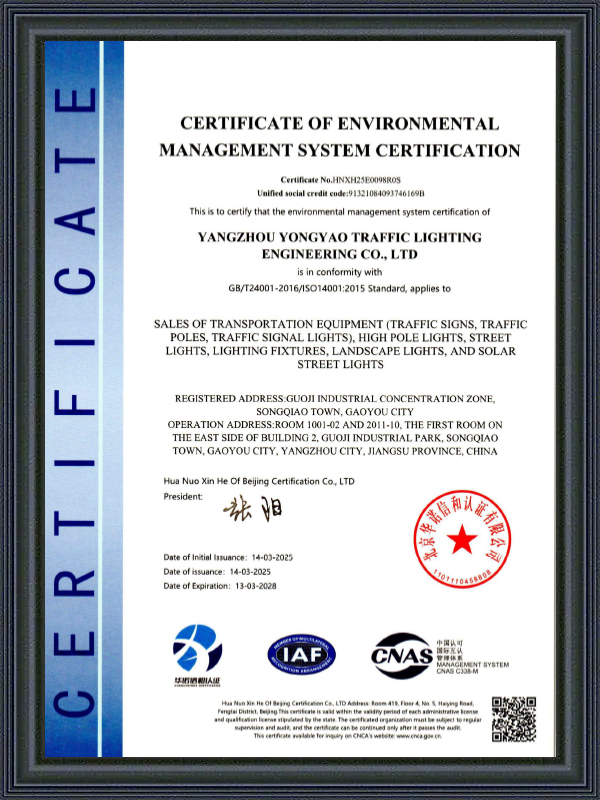
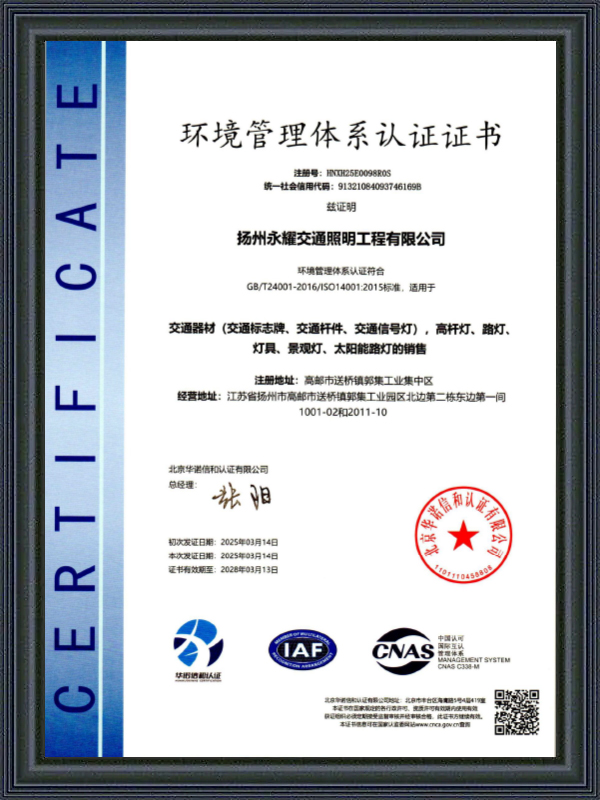
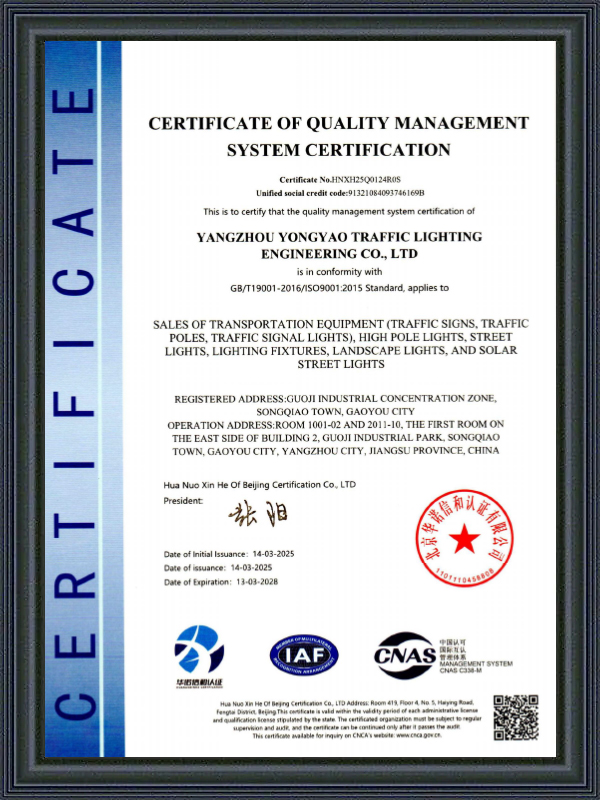
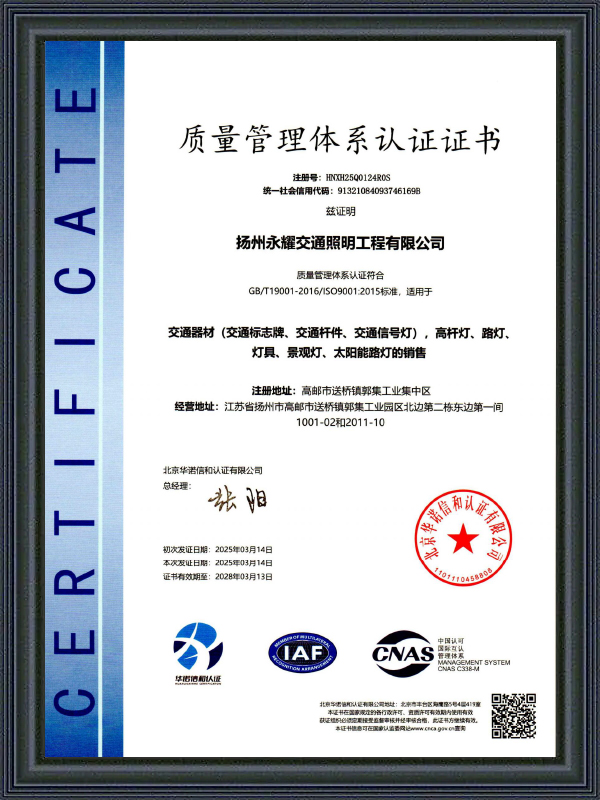
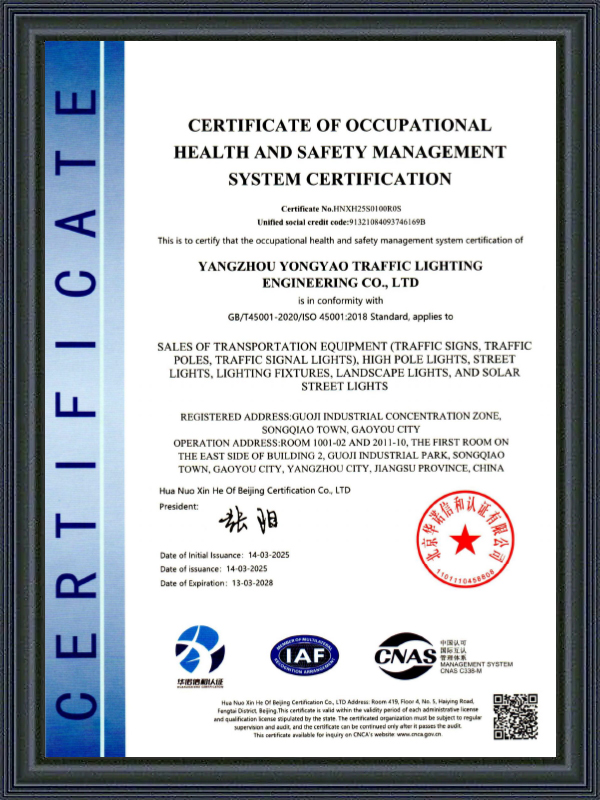
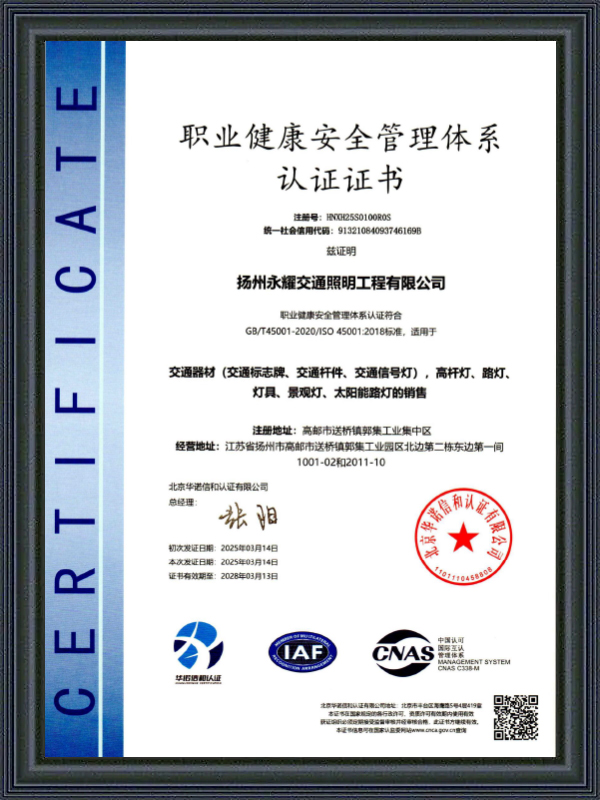
Our quality management system is certified to ISO 9001, and our environmental and occupational health and safety management systems are certified to ISO 14001 and ISO 45001 respectively. These certifications support project compliance requirements for infrastructure works.
Installation, Maintenance, and Serviceability
Monitoring poles are installed on concrete foundations with anchor bolts. The foundation design must account for wind load, pole weight, and equipment payload. We provide anchor bolt templates and installation drawings to assist site teams. Grounding and lightning protection must be verified before equipment mounting; the grounding resistance should be less than 4 ohms.
For maintenance, the pole design allows access to internal cable management through a handhole. Camera and sensor brackets are bolted for easy replacement. Hot-dip galvanizing provides long-term corrosion protection with minimal upkeep; periodic inspection of the coating and grounding system is recommended.
Information We Use to Configure Your Solution
To prepare a suitable proposal, we need the following project inputs. Sharing these details early helps us confirm feasibility, propose the right configuration, and provide an accurate quotation.
- Application and location: Site type (toll station, city entrance, checkpoint), wind zone, and environmental conditions.
- Equipment list: Camera models, radar units, lighting, and any other mounted devices, including weights and dimensions.
- Pole specifications: Required height, arm length, wall thickness, material grade, and surface finish.
- Mounting details: Hole patterns, bracket types, and interface dimensions from equipment suppliers.
- Foundation and installation: Anchor bolt layout, cable entry direction, and grounding requirements.
- Documentation and delivery: Required inspection records, certification, packaging, and shipping terms.
Frequently Asked Questions
What is the typical lead time for a custom monitoring pole order?
Lead time depends on pole complexity, quantity, and current production schedule. After confirming specifications, we provide an estimated lead time and production schedule with the quotation. For project-based orders, we coordinate delivery to match site requirements.
Can you manufacture poles to match specific camera brands?
Yes. We manufacture based on customer drawings and equipment interface dimensions. Provide the camera or radar mounting details, and we will adjust the hole patterns and brackets accordingly.
What surface protection do you offer for coastal environments?
Standard hot-dip galvanizing provides corrosion resistance for most environments. For coastal or highly corrosive areas, we can increase coating thickness or apply additional protective paint as specified.
Do you provide installation drawings and foundation details?
Yes. We supply general arrangement drawings, anchor bolt templates, and foundation load data to assist civil works. These documents are part of the technical package confirmed before production.
How do you ensure the pole will not vibrate in high winds?
We review the wind load and equipment payload during technical evaluation. If needed, we increase wall thickness, add reinforcing ribs at the base, or adjust the foundation design to improve stability. The goal is to maintain a stationary imaging platform under site conditions.
Related Products and Categories
Our portfolio also includes View More for applications with different operating ranges, interfaces or integration requirements.
Yongyao provides customized traffic signal products for different road infrastructure projects.
We support adjustments in structure, dimensions, installation methods, and equipment compatibility to meet specific project requirements.

Yongyao is ready to support your project with responsive communication and practical, project-oriented product solutions.
-
 18052558887@163.com
-
913041567@qq.com
-
 +86-18052558887
-
 Zone 3, Guoji Industrial Park, Songqiao Town, northern suburbs of Yangzhou, Jiangsu Province, China
Copyright © 2026 by Yangzhou Yongyao Traffic Lighting Co., Ltd.
